

OTC Hearing Aids vs Prescription Devices: What People Get Wrong Before Buying
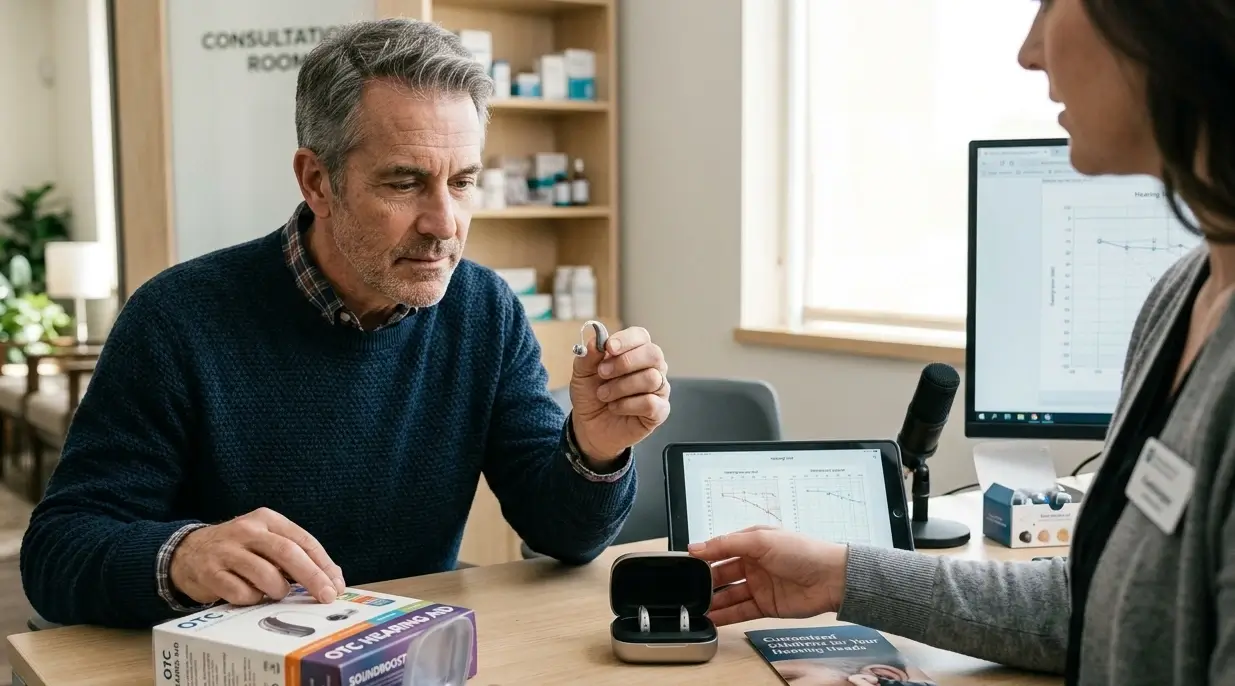
Have you noticed the buzz lately? It seems like everywhere you turn, someone is talking about over-the-counter devices. The rising popularity of OTC hearing aids makes perfect sense. They are popping up on online stores, promising a quick, easy fix for a problem that affects millions. The appeal is obvious: convenience and a lower price tag. You just click, and they get delivered right to your door, right?
But here is the catch. A prevalent misconception is floating around that all hearing aids are basically the same. This simply is not true. Buying the wrong device can actually worsen your outcomes, leaving you frustrated and still struggling to hear the punchline of a joke at family dinners. We want to clear the air. In this piece, we will provide a clear, expert comparison of OTC hearing aids vs prescription devices. We will break down exactly what people get wrong before buying, so you can protect your ear health, preserve your wallet, and get back to enjoying the sounds of life.
Key Takeaways Before You Buy
- Understanding the difference between OTC and prescription hearing aids is crucial; OTC is a generic amplifier, while a prescription device is a tailored medical solution.
- OTC devices are strictly for perceived mild to moderate hearing loss, not for complex or severe conditions.
- Skipping a professional hearing test can lead to missed medical diagnoses and wasted money on the wrong device.
- Choosing the wrong hearing solution can result in poor sound quality, discomfort, and eventual device abandonment.
- A professional fitting ensures you receive ongoing support, precise tuning, and a device that actually matches your unique ear anatomy.
What Are OTC Hearing Aids?
Let us look at the new options on the market. By definition, OTC (over-the-counter) hearing aids are standard sound-amplification devices available directly to consumers without the need for a hearing specialist. They gained major traction after recent FDA regulations in the United States paved the way for broader accessibility. While Canadian regulations differ slightly, the market impact has crossed the border, and Canadians can order these devices online.
Who are they actually designed for? These devices are built specifically for adults who believe they have mild hearing loss or moderate hearing loss. If you just need a little volume boost in quiet environments, like watching television alone, they might catch your eye.
However, you have to weigh the OTC hearing aids pros and cons carefully. Their key features usually involve basic volume control and perhaps some simple smartphone app settings. The limitations? They lack advanced customization. Accessibility and pricing are their main selling points. They are generally more affordable upfront and very easy to order with a click. But are OTC hearing aids effective? Well, that depends entirely on the specific nature of your hearing issues. For many, they act simply as generic volume knobs rather than sophisticated medical tools.
What Are Prescription Hearing Aids?
Now, let us talk about the professional standard. Prescription hearing aids are highly specialized medical devices. The role of hearing specialists in this process is irreplaceable. When you sit down with a professional, they do much more than just hand you a box. They provide a precise hearing aid fitting and custom hearing aid programming tailored exactly to your unique audiogram results.
You gain access to advanced technology and personalization that an over-the-counter option simply cannot match. From sophisticated digital hearing aids that automatically adjust to noisy restaurants, to modern Bluetooth hearing aids that stream calls directly to your ears, the technology is robust and discreet. Plus, you receive ongoing support and adjustments. If something feels off a month later, your hearing professional is right there to fine-tune it. The prescription hearing aids benefits revolve around a long-term, supportive partnership in your ongoing hearing care journey.
OTC vs Prescription Hearing Aids – Key Differences
Let us break down the exact differences category by category, so you know exactly what you are getting into.
Level of Customization
Think of it this way: one is a custom-tailored suit, and the other is a one-size-fits-all t-shirt. Prescription devices are mapped to the exact frequencies you struggle to hear. OTC devices usually offer a few generic preset programs. If your hearing loss is uneven, an OTC device might make the sounds you already hear well uncomfortably loud, while completely failing to clarify the softer sounds you are missing. Customization is what turns noise into clear speech.
Sound Quality and Performance
Have you ever listened to music through cheap dollar-store headphones versus high-end studio monitors? That is a fair metaphor here. Prescription devices process sound dynamically. They filter out annoying background noise and actively focus on speech enhancement. OTC devices often amplify everything equally, meaning the clattering of dishes might drown out the person sitting across from you. The best hearing aid option for hearing loss will always be the one that delivers clear, manageable sound in your specific daily environments.
Medical Evaluation and Diagnosis
This is a critical factor. When you buy an OTC device, you are merely guessing at your problem. Maybe it is sensorineural hearing loss, or maybe it is just a stubborn buildup of earwax. A professional evaluation gives you hard facts. Trying to fix a medical issue without a proper diagnosis is like putting a piece of tape over your car’s check engine light and hoping for the best.
Support and Follow-Up Care
What happens if your device whistles, feels uncomfortable, or simply stops working? With OTC, you might have to call a generic toll-free number and wait on hold for an hour. With a prescription device, you have the professional hearing aid-fitting benefits, including a local expert in the Waterloo Region ready to clean, adjust, and repair your device in person.
Cost and Long-Term Value
People often ask, “Why pay more?” It is a fair question. While OTC devices have a lower initial price tag, their lifespan is often much shorter. The lack of adjustability means you might outgrow them quickly if your hearing changes. Prescription devices are an investment in durable assistive listening devices that come with warranties, professional care, and a much longer operational life. Buy nice or buy twice, as the old saying goes.
Also Read: How Much Do Hearing Aids Cost? Pricing Guide
What People Get Wrong Before Buying Hearing Aids
We see it all the time at the clinic. Smart, well-meaning folks make honest mistakes when trying to tackle their hearing health independently. Here is what trips people up the most.
Assuming OTC Works for All Types of Hearing Loss
Many assume these gadgets are universal magic bullets. The truth? They are strictly for perceived mild-to-moderate issues. They are not suitable for severe or complex cases. If you have profound loss, popping in an OTC device will just leave you frustrated and dealing with a lot of distorted noise.
Skipping a Professional Hearing Test
“I know I cannot hear well, why do I need a test?” Because a comprehensive hearing test reveals the *why* behind your hearing loss. Skipping it means missing underlying medical conditions. You could have fluid in your ear, a hidden infection, or something requiring a doctor’s immediate attention.
Focusing Only on Price
We all love saving a few dollars. But looking only at the initial sticker price hides the reality of the situation. There are hidden long-term costs. If an OTC device breaks or doesn’t work for you, you end up buying another one and then eventually visit a clinic anyway.
Underestimating the Importance of Proper Fit
Your ear canal is as unique as your fingerprint. A generic plastic dome might feel fine for the first five minutes, but try wearing it for twelve hours straight. Comfort and performance issues arise quickly without a proper fitting. If it hurts your ear, you will simply leave it in a drawer gathering dust.
Expecting Instant Results
Did you know your brain needs time to relearn how to hear? People put in a new device and expect to instantly hear like a teenager again. An adjustment period is strictly required. Without a professional guiding you through this neurological retraining process, it is easy to get overwhelmed and give up.
Ignoring Ongoing Support Needs
Hearing changes over time. Devices need cleaning. Tiny parts wear out. People frequently forget about maintenance and tuning. You will need ongoing support, and ignoring this reality leads to devices that underperform for years.
Pros and Cons of OTC Hearing Aids
Let us lay all the cards on the table. Should I buy OTC hearing aids? Here is the honest, transparent breakdown.
Pros
- Lower upfront cost: They keep more money in your pocket today.
- Easy access: You can order them online without waiting.
- No appointment required: You skip the waiting room entirely.
Cons
- Limited customization: You get exactly what comes in the box, with little room for personalization.
- No professional guidance: You are entirely on your own for setup, cleaning, and troubleshooting.
- Risk of incorrect use: You might set the volume dangerously high, risking further damage to your sensitive ears.
Pros and Cons of Prescription Hearing Aids
What about the professional route? Let us look at the other side of the coin.
Pros
- Personalized fit and programming: Tailored specifically to your unique hearing profile and ear shape.
- Better sound clarity: Advanced processing effectively reduces background noise, making conversations enjoyable again.
- Professional support: An expert is in your corner for the long haul, ready to help when things go wrong.
- Long-term hearing health management: Regular check-ups ensure your hearing is carefully monitored over time.
Cons
- Higher upfront cost: They require a larger initial financial investment.
- Requires appointments: You have to make time in your schedule to visit the clinic.
Who Should Choose OTC vs Prescription Devices
Still on the fence about your options? Let us help you decide which camp you currently belong to.
OTC May Be Suitable For:
- Mild hearing loss: You just need a tiny bump in volume for watching TV or quiet one-on-one chats.
- Tech-savvy users: You are highly comfortable setting up apps, pairing Bluetooth devices, and troubleshooting gadgets on your own.
- Budget-conscious buyers: You have a strict spending limit right now and need a temporary fix.
Prescription Is Better For:
- Moderate to severe hearing loss: You struggle significantly in daily conversations, restaurants, and group settings.
- Complex hearing conditions: You have ringing in the ears, asymmetrical hearing loss, or a history of ear disease.
- Users needing long-term support: You want true peace of mind knowing a dedicated expert has your back.
Risks of Choosing the Wrong Hearing Solution
This is not like buying the wrong brand of coffee. The risks of OTC hearing aids are very real and should not be ignored. If you choose poorly, you face worsening hearing issues. Blasting unregulated, uncalibrated sound into your ear can cause permanent noise-induced damage.
You will also likely experience poor sound quality, making everything sound tinny, echoey, or unnaturally loud. This leads straight to frustration and device abandonment. The biggest risk of all? Missed medical diagnoses. Getting hearing aids without a hearing specialist’s supervision means a professional never examines your ear canal to rule out serious physical conditions.
Also Read: Do You Really Need Two Hearing Aids? Benefits Explained
Why a Hearing Test Should Always Come First
Before you spend a single dime on any device, you need solid data. Identifying the exact type and severity of hearing loss is the first step. Are you dealing with natural age-related decline or something else entirely?
Testing ensures correct treatment. It is the only way to accurately map out exactly what frequencies you are missing in your daily life. Most importantly, securing a baseline test is vital for preventing long-term damage. It sets a healthy foundation for your entire journey toward better ear health.
How Discover Hearing Centre Helps You Choose the Right Device
At Discover Hearing Centre, we serve the Waterloo Region and provide hearing tests in Kitchener, Waterloo, and nearby areas, helping you make confident, informed decisions about your hearing care. We believe the right choice starts with the right diagnosis, which is why we begin with comprehensive hearing assessments to fully understand your hearing needs.
Based on your results, we provide expert recommendations tailored to your lifestyle, followed by personalized fittings to ensure comfort and optimal performance. We also offer ongoing care and adjustments, so your device continues to meet your needs over time.
Hearing Care Is Not One-Size-Fits-All: Your Recap and Next Steps
To wrap things up, navigating the world of hearing loss can feel overwhelming, but you do not have to do it alone. While off-the-shelf options online might seem tempting for their convenience, they often fall short in long-term comfort, true sound clarity, and protection of your overall ear health. Prescription devices offer the personalized fit, advanced technology, and professional partnership required to truly improve your quality of life. The most important step you can take today is getting a clear picture of your hearing health through a professional evaluation.
Ready to take control of your hearing? Book a Professional Hearing Test at Discover Hearing Centre and let us map out a clear path forward. If you are still exploring your options, our experts are here to help you find the Right Hearing Solution for Your Needs.

You Might Also Like

Why Diabetics Should Include a Hearing Test in Their Annual Health Routine
Invisible Hearing Aids: Pros, Cons, Cost, and Who They’re Best For
Can You Trial Hearing Aids Before Buying? What to Know and Ask
Take the First Step Toward Better Hearing
Schedule a Hearing Test Today
Have Questions?
Curious about hearing loss, tinnitus relief, or treatment options in Waterloo? Talk to one of our hearing care professionals today.