


How Hearing Loss Can Affect Workplace Productivity

Let us paint a familiar picture. You are sitting in the weekly Monday morning team meeting. Your coffee has barely kicked in, and your manager is rattling off the project goals for the week. You catch the general gist of the conversation, but the finer details sound slightly muffled, almost as if you are listening underwater. Do you stop the meeting to ask them to repeat the timelines for the third time? Probably not. You just smile, nod along, and silently hope someone sends out a detailed summary email later.
Does this sound relatable? Many of us have been there. However, if this is a daily occurrence, you might be dealing with an underlying issue. By the time the afternoon rolls around, you feel completely drained. It is easy to blame a lack of sleep, workplace stress, or simply running out of steam. Many people think their productivity issues stem from a lack of focus. But what if the real culprit is actually your ears?
Hearing loss is often invisible. Because it tends to happen gradually, professionals usually write off their struggles as burnout or distraction. However, the connection between hearing loss, workplace productivity and daily fatigue is profound. Today, we are exploring the genuine impact of hearing loss at work and uncovering practical solutions to help you reclaim your energy and efficiency.
Key Takeaways
- It is more than just volume: Hearing loss forces your brain to work much harder to decode speech, leading to severe mental fatigue by the end of the workday.
- Productivity takes a direct hit: From slower task completion to missing crucial instructions, untreated hearing loss, productivity declines are a tangible business challenge.
- The environment matters: Modern work setups, such as open-concept offices and hybrid virtual meetings, often exacerbate hearing challenges.
- Support is available: Professional assessments and straightforward workplace accommodations for hearing loss can quickly turn the tide and improve your daily output.
What Is Hearing Loss and Why It Matters at Work
To understand the scope of the problem, we must first look at what we are actually dealing with. Hearing loss comes in several forms. The most prevalent form of hearing loss in adults is sensorineural hearing loss, which results from gradual wear and tear on the delicate hair cells in the inner ear. It typically develops over years due to the natural aging process, prolonged noise exposure, or underlying lifestyle factors.
Because the decline is usually quite gradual, it often goes completely unnoticed in professionals. You might simply think people are mumbling more these days, or you might blame the poor acoustics in the boardroom. But ignoring these early changes has real consequences. Understanding hearing impairment workplace challenges is vital because your hearing health is directly tied to how effectively you can process information, collaborate with your peers, and execute tasks on time.
The Hidden Productivity Cost of Hearing Loss
When we think about workplace efficiency, we often look at software tools, time management habits, and organizational structures. We rarely consider sensory health. Yet, the business and economic impact of untreated hearing issues is substantial.
When you cannot hear clearly, task completion naturally slows down. You spend extra time double-checking instructions or piecing together fragmented conversations. This introduces a significant risk of errors. A misunderstood deadline or a missed compliance guideline can cost a business time and money.
Furthermore, this leads us to the concept of presenteeism versus absenteeism. Absenteeism is when an employee misses work entirely. Presenteeism is when an employee is physically sitting at their desk but operating at a reduced capacity. Hearing loss job performance issues frequently manifest as presenteeism. You are there, you are trying your hardest, but you are effectively swimming upstream against a steady current of communication barriers.
7 Ways Hearing Loss Affects Workplace Productivity
If you are wondering how hearing loss specifically affects work performance, let us break down the daily hurdles it creates.
Communication Breakdowns in Meetings
Meetings are the lifeblood of most corporate environments. When hearing is compromised, these gatherings become a minefield of repetition and misunderstandings. You might answer a question incorrectly if you mishear the premise, leading to awkward delays and a disruption to the team’s momentum.
Increased Cognitive Load and Listening Fatigue
Your ears collect sound, but your brain is the engine that actually processes it. When the audio signal sent to the brain is degraded, your brain has to borrow resources from your memory and executive function just to make sense of the words. This concept of cognitive load hearing loss work is a major factor in employee burnout. By 3:00 PM, you are experiencing profound listening fatigue because your brain has been working overtime just to keep up.
Reduced Focus and Concentration
Have you ever tried to read a complex report while someone is talking loudly next to you? It is exhausting. When you have an untreated hearing issue, maintaining focus requires significantly more mental energy. This mental exhaustion spills over into your independent tasks, drastically reducing your overall concentration and output.
Lower Work Efficiency (Presenteeism)
As mentioned earlier, presenteeism is a silent productivity killer. You might be putting in eight hours at the office, but if you are spending a portion of that time deciphering poorly heard instructions or recovering from meeting fatigue, your actual efficient output is much lower.
Missed Information and Workplace Errors
“Did they say the 15th or the 50th?” Missing a single syllable can change the entire meaning of an instruction. These small gaps in speech recognition can lead to critical workplace errors, missed deadlines, and severe compliance risks depending on your industry.
Also Read: Effective Strategies for Managing Hearing Loss in Workplaces
Social Withdrawal and Team Disengagement
Human beings naturally avoid situations that make them uncomfortable. If group lunches or brainstorming sessions become stressful because you cannot follow the natural dialogue, you might start declining invitations. This social withdrawal fractures team dynamics and leaves you isolated.
Limited Career Growth Opportunities
There is an unfortunate link between hearing loss and career growth. If you are stepping back from leadership roles because you fear you will not be able to manage large group discussions, or if your manager misinterprets your quietness as a lack of engagement, your upward mobility can stall out entirely.
Hearing Loss in Today’s Work Environment
The modern workplace has evolved, but not always in ways that are friendly to our ears. The shift toward remote work and the hybrid workplace model has introduced an entirely new set of communication barriers. Think about your average week. How many hours do you spend on Zoom or Microsoft Teams? Poor internet connections, compressed audio, and colleagues who forget to hold their microphones close to their mouths make virtual calls incredibly taxing.
When you go into the office, the popular open-office layout presents its own challenges. The lack of walls means background noise, ringing phones, and cross-desk chatter create a wall of sound that makes speech clarity nearly impossible. With an increased reliance on rapid, verbal communication in modern agile environments, those with hearing difficulties are often left piecing together a puzzle with several missing pieces.
Signs Hearing Loss May Be Affecting Your Work Performance
Are you wondering if your ears are the root cause of your work stress? Recognizing the signs that hearing loss is affecting your job early on can save you months of frustration. Consider these common red flags:
- You are frequently asking your colleagues to repeat themselves.
- You experience specific difficulty hearing in meetings, especially when multiple people are talking at once.
- You feel totally exhausted after long conversations or networking events.
- You find yourself avoiding phone calls or video chats, preferring to communicate strictly through email or instant messaging.
- You frequently misinterpret instructions and have to redo tasks.
- You experience tinnitus, a persistent ringing or buzzing in the ears that distracts you from your computer screen.
Workplace Risks Beyond Productivity
While efficiency is crucial, we must also acknowledge the broader occupational health concerns. In industries such as manufacturing, construction, or warehousing, missing an auditory cue is not just a nuisance; it is a major safety hazard. Failing to hear a warning beep or a colleague shouting to stop a machine can lead to severe accidents.
Even in an office setting, chronic miscommunication takes a heavy toll on team morale. If colleagues feel they constantly have to repeat themselves, or if an employee feels alienated because they cannot keep up with the banter, the overall workplace culture suffers. Employee performance thrives on trust and clear communication, both of which are threatened by unaddressed hearing challenges.
Solutions: How to Improve Productivity with Better Hearing
The good news? You do not have to just accept this as your new normal. There are concrete, highly effective steps you can take to bridge these gaps.
Professional Hearing Assessments
Everything begins with data. The importance of early diagnosis cannot be overstated. A comprehensive hearing test will map your hearing profile, identifying which frequencies you are missing.
Hearing Aids and Assistive Technology
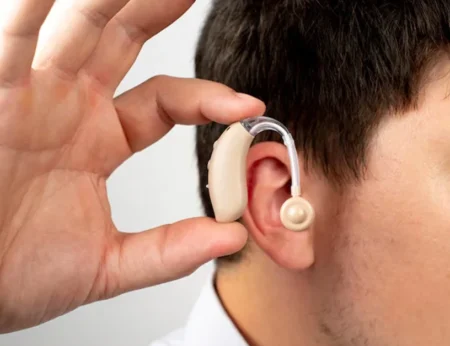
Forget the bulky devices of the past. Modern hearing aids are sleek, discreet, and packed with advanced technology. They can automatically filter out background noise in an open office and focus strictly on speech. Furthermore, many assistive listening devices can stream audio from your laptop directly to your ears during a video call, delivering crystal-clear sound.
Workplace Accommodations
In Canada, you have the right to request reasonable adjustments to help you do your job effectively. Simple workplace accommodations for hearing loss might include moving your desk to a quieter corner of the office, using real-time captioning tools for all video meetings, and implementing noise-control strategies, such as acoustic panels in meeting rooms.
Communication Strategies for Teams
Sometimes the best solution is a change in team habits. Encourage inclusive meeting practices, such as having one person speak at a time and providing written agendas beforehand. Simple, clear speech practices, like ensuring you are facing the person you are talking to and keeping your hands away from your mouth, go a long way.
When to Seek Help from a Hearing Specialist
If any of the scenarios discussed today resonate with you, it is time to take action. Do not wait until you are completely burnt out or until you face a performance review to address the issue. The benefits of early intervention are vast. By consulting with a hearing specialist, you can address those early warning signs before they escalate into major professional hurdles. Getting your hearing checked is a simple, painless process that can yield immense dividends for your career longevity and personal well-being.
Also Read: How Untreated Hearing Loss Affects Your Quality of Life
How Discover Hearing Centre Can Help You Stay Productive
Discover Hearing Centre serves the Waterloo Region and offers hearing tests in Kitchener, Waterloo, and nearby areas, helping individuals stay focused, confident, and productive at work and in daily life. Our clinic offers:
- Experienced hearing care professionals who assess your hearing with accuracy and care
- Advanced hearing solutions designed to improve clarity in conversations and everyday environments
- Personalized treatment plans tailored to your lifestyle and specific hearing needs
- Focus on improving daily life and work performance so you can communicate effectively and stay engaged
Are you ready to stop running on fumes and start participating fully in your professional life?
Improve your work performance with better hearing and book a hearing test at Discover Hearing Centre today.
Sound Strategies for Career Success: A Quick Recap
Navigating the modern workplace is challenging enough without having to fight a daily battle to hear what is going on around you. As we have explored, the true cost of unaddressed hearing issues stretches far beyond just asking someone to repeat themselves. It drains your cognitive energy, dampens your daily productivity, and can even place artificial limits on your career trajectory.
Fortunately, you have the power to change the narrative. By recognizing signs early, leveraging modern technology, and drawing on professional expertise, you can eliminate the guesswork from your daily communications. Taking care of your hearing is not just a health choice; it is a vital investment in your professional future and overall quality of life.

You Might Also Like

7 Questions to Ask Before Booking a Hearing Test
How to Protect Your Hearing at Concerts and Festivals

Hearing Aid Domes vs Custom Earmoulds: Which Is Better for You?
Take the First Step Toward Better Hearing
Schedule a Hearing Test Today
Have Questions?
Curious about hearing loss, tinnitus relief, or treatment options in Waterloo? Talk to one of our hearing care professionals today.