

What Is the Assistive Devices Program for Hearing Aids?

If you’ve recently started exploring hearing aids, you’ve probably discovered one thing fairly quickly: hearing care is an investment. Many people across Kitchener-Waterloo ask us the same question after learning they may benefit from hearing aids: “Is there any financial help available?”
The good news is that Ontario’s assistive devices program for hearing aids may help eligible residents reduce some of the cost. The Assistive Devices Program (ADP), administered by the Ontario Ministry of Health, provides funding assistance for qualifying hearing devices and certain other approved hearing technologies.
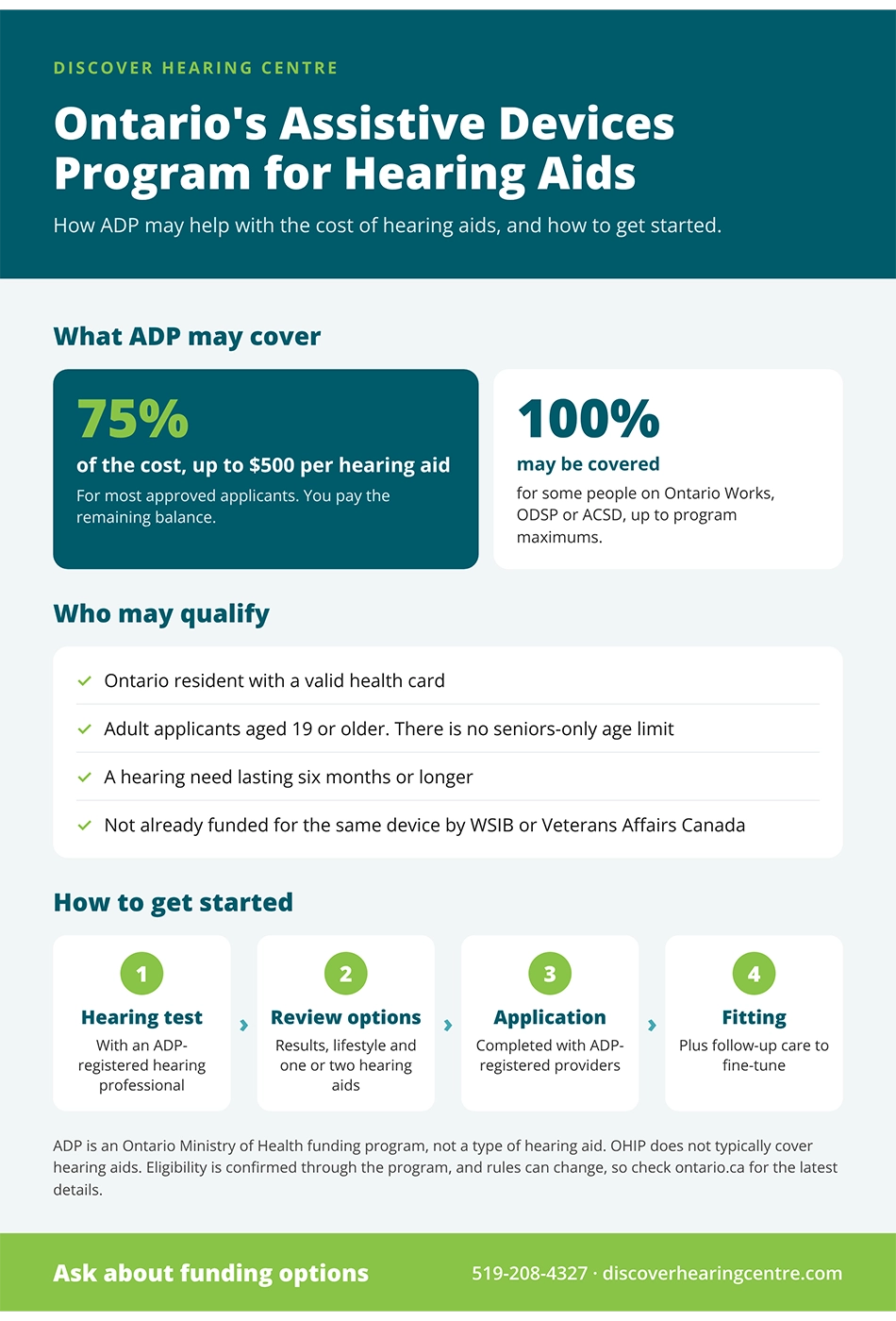
For most approved applicants, ADP covers 75% of the eligible hearing aid cost up to a maximum of $500 per ear. Different funding arrangements may apply for individuals receiving certain Ontario social assistance benefits.
In this guide, we’ll explain what the program is, who may qualify, what it may cover, how to get started, and what other hearing aid funding options may be available.
Key Takeaways
- The Assistive Devices Program (ADP) is an Ontario Ministry of Health funding program.
- ADP may help eligible Ontarians pay for hearing aids and certain approved hearing devices.
- Most approved applicants receive funding of up to $500 per ear toward eligible hearing aids.
- Eligibility is determined through the program and is not based on income.
- ADP has no age criteria for seniors. The only requirement is that the patient is over 19 years old.
- A professional hearing assessment is typically the first step in determining whether hearing aids are appropriate.
What Is Ontario’s Assistive Devices Program (ADP)?
Ontario’s Assistive Devices Program helps eligible residents access certain medical and assistive devices that support daily living. For people with documented hearing loss, the program may contribute toward the cost of hearing aids and some other approved hearing technologies.
One common misconception is that OHIP covers hearing aids. While OHIP provides coverage for many healthcare services, it does not typically pay for hearing aids themselves. That’s one reason why the Ontario assistive devices program hearing aids benefit is so important for many residents.
ADP is not an income-based program. Eligibility depends on meeting the program’s requirements rather than household earnings.
Because hearing needs, hearing devices, and funding situations can vary from person to person, a hearing specialist can help explain how the program may apply to your circumstances and what steps may be required.
What Does ADP Cover for Hearing Aids?
Many people researching ADP hearing aids Ontario want to know one thing first: how much does ADP cover for hearing aids?
At the time of writing, approved applicants typically receive funding equal to 75% of the eligible hearing aid cost up to a maximum contribution of $500 per ear. Because funding is applied per device, the available contribution may differ depending on whether one or two hearing aids are recommended.
The remaining out-of-pocket cost depends on several factors, including hearing aid style, technology level, connectivity features, and individual hearing needs. As a result, patient costs can vary considerably.
If you’re curious about the factors that influence pricing, our guide on how much hearing aids really cost explains the different technology levels and considerations involved.
It’s also important to understand that ADP replacement funding is not an automatic entitlement after a certain number of years. Replacement applications may be considered when hearing needs change significantly or when an existing device is worn out, no longer under warranty, and cannot be repaired at a reasonable cost. Program requirements can change over time, so current eligibility should always be confirmed through official ADP resources.
Who May Qualify for ADP Hearing Aid Funding?
ADP hearing aid eligibility is ultimately determined through the provincial program.
Generally speaking, applicants must be Ontario residents with a valid Ontario health card and have a disability that requires a hearing device for six months or longer. Applicants must also meet other program requirements, including funding-related criteria involving organizations such as the Workplace Safety and Insurance Board (WSIB) or Veterans Affairs Canada.
A professional hearing assessment is necessary to determine whether hearing aids are appropriate for your hearing needs. Hearing difficulties can have different causes, and only a proper evaluation can determine what type of support may be beneficial.
The process can seem intimidating at first, but it doesn’t need to be. A hearing care professional can explain the requirements in plain language and help you understand where you stand before moving forward.
How to Get Started with ADP for Hearing Aids
The process may sound complicated at first glance, but it is often more straightforward than many people expect. Here is a general overview of how the process typically works.
Book a Comprehensive Hearing Test
The first step is arranging a professional hearing assessment. Adult applicants generally begin with a hearing evaluation conducted by an ADP-registered audiologist or hearing instrument specialist. Ontario hearing aids also require a prescription from an audiologist or physician.
A comprehensive hearing test provides valuable information about your hearing profile, communication challenges, and whether hearing aids may be appropriate. Afterward, the results are reviewed and explained clearly so you understand your options.
Review Your Results and Hearing Aid Options
Once your assessment is complete, your hearing specialist can discuss hearing aid recommendations based on your hearing needs, lifestyle, and daily listening environments.
This conversation often includes discussing different technology levels, hearing aid styles, and whether one or both ears may benefit from amplification. If you’re wondering whether two devices are necessary, our article “Do you really need two hearing aids?” provides helpful context. Because ADP funding is applied per device, this discussion can be an important part of planning your hearing care.
Complete the ADP Application With Registered Providers
When hearing aids are recommended and appropriate, the application process moves forward with registered providers.
In general, the ADP-registered audiologist or hearing instrument specialist helps complete the clinical portions of the application and confirms the hearing device recommendation. An ADP-registered vendor then reviews the documentation, completes the vendor requirements, and electronically submits the application according to current program procedures.
Specific provider responsibilities may vary, and applicants should confirm the current process with their hearing clinic.
Get Fitted and Follow Up
Receiving hearing aids is only one step in the journey. Proper setup, education, and follow-up support play an important role in long-term success.
A professional hearing aid fitting helps ensure your devices are programmed appropriately, fit comfortably, and support your communication goals. Follow-up visits provide opportunities to make adjustments based on your real-world listening experiences and help you get the most from your hearing technology.
What Other Funding Options Can Help?
ADP hearing aid funding may be only one piece of the puzzle.
Depending on your situation, additional support may be available through private insurance plans, extended health benefits, workplace programs, or other government assistance programs. Some individuals may also explore financing options that spread costs over time.
Because every situation is different, it’s worth reviewing your insurance coverage carefully and asking questions about available programs. Our guide to financial assistance for hearing aids explores several additional funding resources that may help reduce out-of-pocket expenses.
A little research today can sometimes uncover support you didn’t realize was available.
ADP Funding vs. Assistive Listening Devices
One point of confusion is that ADP is a funding program, not a type of hearing device.
The program may help fund eligible hearing aids and certain approved hearing technologies, including some FM systems. Assistive listening devices, however, represent a much broader category of products designed to improve hearing in specific situations.
Not every assistive listening device qualifies for ADP funding. Coverage depends on the device type and current program guidelines. If you’re unsure whether a particular device may qualify, a hearing specialist can help clarify your options.
How Discover Hearing Centre Can Help
Navigating hearing aid funding programs in Ontario can feel overwhelming when you’re already trying to understand your hearing health. That’s why we focus on making the process easier to understand.
At Discover Hearing Centre, we help individuals and families throughout Kitchener-Waterloo understand their hearing needs, hearing aid options, and potential funding opportunities in clear, straightforward language. Our goal is to help you make informed decisions without pressure or confusion.
Before publishing this article, we recommend confirming Discover Hearing Centre’s current ADP registration status and exactly how the clinic assists with applications so the process can be described accurately.
Making Hearing Care More Accessible
The Assistive Devices Program may help make hearing aids more affordable for eligible Ontario residents, but understanding the process is often the first challenge. Knowing what ADP covers, who may qualify, and what other funding options may be available can make the path forward much clearer.
The first step is always understanding your hearing health. Once you know where you stand, it becomes much easier to explore hearing aid options and available financial support.
Wondering whether ADP could help with the cost of your hearing aids? Book an appointment with Discover Hearing Centre to have your hearing assessed and your funding options explained.

You Might Also Like
How Do I Convince My Husband to Get a Hearing Test?

How Often Do Hearing Aids Need to Be Adjusted?

Why Diabetics Should Include a Hearing Test in Their Annual Health Routine
Take the First Step Toward Better Hearing
Schedule a Hearing Test Today
Have Questions?
Curious about hearing loss, tinnitus relief, or treatment options in Waterloo? Talk to one of our hearing care professionals today.