


How Do I Convince My Husband to Get a Hearing Test?
You have repeated yourself three times during dinner. The television volume seems to creep up a little more every month. A conversation ends with a frustrated “never mind” because explaining it again feels exhausting. If you’ve found yourself wondering how to convince my husband or partner to get a hearing test, you’re certainly not alone.
Many spouses feel caught between concern and frustration. You want to help, but you do not want the conversation to turn into an argument. The good news is that the most effective approach is usually not pressure or persuasion. Instead, it starts with a calm, caring conversation focused on how hearing challenges affect daily life, followed by a simple, low-pressure first step.
In this article, we’ll explore why some men resist hearing tests, the signs of hearing loss in a husband or partner, practical ways to start the conversation, what happens during a hearing assessment, and what to do if he still isn’t ready.
Key Takeaways
- Hearing loss often develops gradually, making it difficult for the person experiencing it to recognize.
- Resistance to a hearing test is often rooted in concern, stigma, or uncertainty rather than stubbornness.
- A supportive conversation focused on shared experiences tends to work better than criticism.
- A hearing test is comfortable, straightforward, and does not automatically mean hearing aids are necessary.
- Early intervention can help reduce communication breakdown, listening fatigue, and relationship strain.
Why Some People Resist a Hearing Test
If your spouse won’t get a hearing test, it may help to understand what’s happening from his perspective.
Gradual hearing loss rarely arrives overnight. Instead, it often develops slowly over many years. The brain does an impressive job filling in missing pieces of speech, allowing someone to follow conversations well enough that they may not realize how much information they’re missing. From their point of view, it can seem like everyone else is mumbling.
Many men also believe their hearing is “not bad enough” to justify an appointment. Others associate hearing loss with ageing and may feel uncomfortable acknowledging a change they see as getting older. Concerns about hearing aid cost, appearance, or what a test might reveal can also create resistance.
For some people, there is a fear that a hearing test will lead to a loss of independence or unwanted changes. In reality, a hearing assessment simply provides information. It helps identify whether hearing concerns exist and what options may be available.
When a spouse refuses a hearing test, it is often less about denying reality and more about protecting himself from worries he may not know how to express.
Signs Your Husband or Partner May Have Hearing Loss
The signs of hearing loss in a husband or partner often show up in everyday situations long before anyone mentions a hearing test.
You may notice him asking others to repeat themselves more often, turning up the television or phone volume, or struggling to follow conversations in restaurants and other noisy environments. Phone calls may become more difficult, and social gatherings can leave him looking unusually tired. Some people begin withdrawing from conversations altogether because keeping up requires so much effort.
These signs can suggest that a hearing test for a spouse may be worthwhile, but they do not confirm hearing loss on their own. A professional hearing assessment can evaluate hearing and help determine appropriate next steps.
If hearing changes occur suddenly or are accompanied by dizziness, you should seek medical attention promptly rather than waiting for a routine appointment.
How to Convince Your Husband or Partner to Get a Hearing Test
If you’re wondering how to convince your spouse to get a hearing test, the goal is not to win an argument. The goal is to open a productive conversation that helps him feel supported.
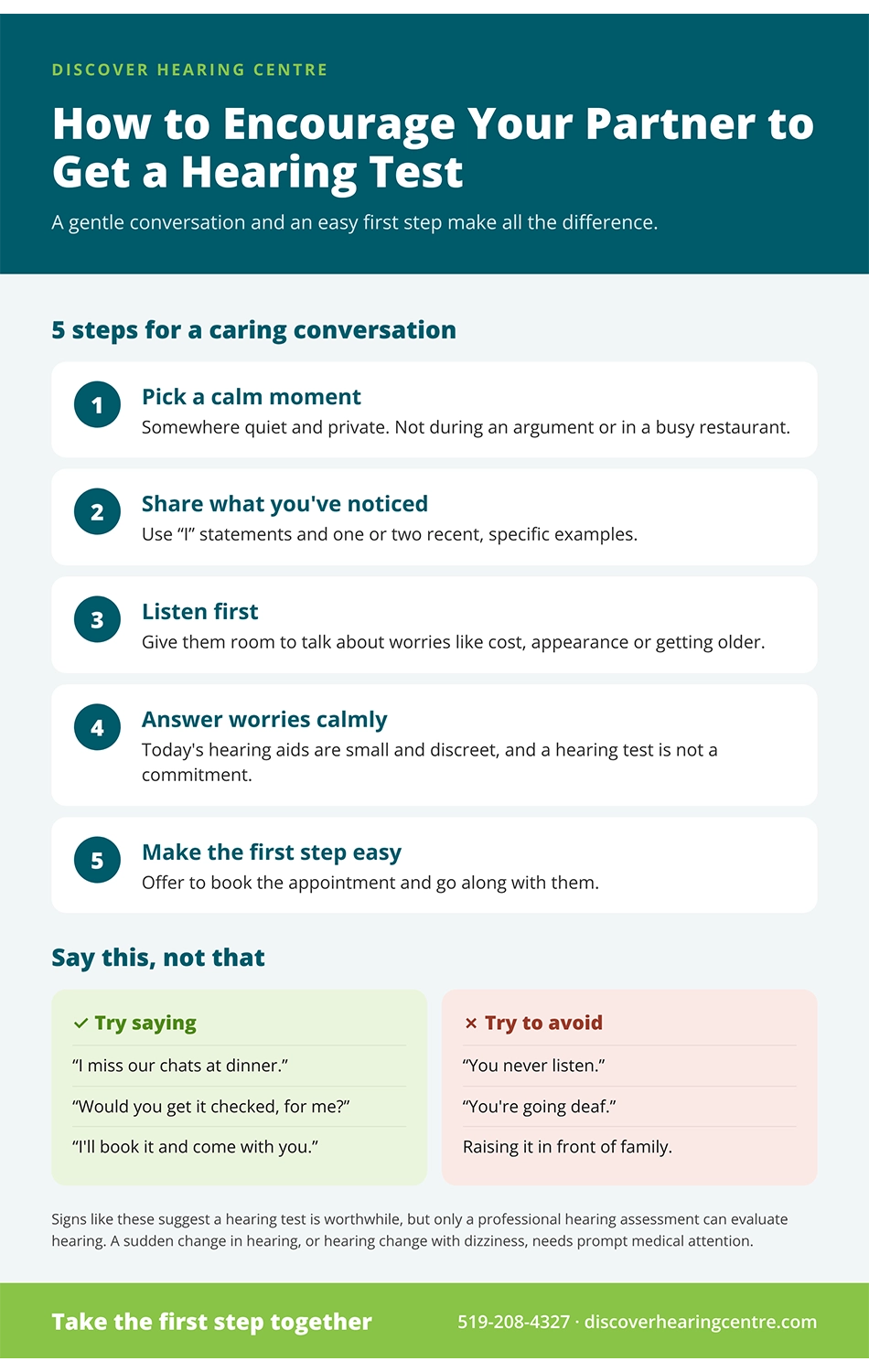
Choose the Right Time and Place
Timing matters.
Bringing up hearing concerns during an argument, in a noisy restaurant, or in front of family members can make anyone feel defensive. Instead, choose a quiet, private moment when you can both focus on the conversation. Reducing background noise also makes it easier for both of you to hear each other clearly, which helps set the right tone from the beginning.
Lead with Care and Specific Examples
When discussing hearing loss in marriage, accusations rarely move the conversation forward.
Try using “I” statements instead. For example, you might say, “I miss being able to share conversations without repeating things,” rather than, “You never listen.”
Specific examples can also be helpful. Mentioning a recent family gathering, dinner outing, or television conversation creates a more meaningful discussion than making broad statements about his hearing.
Listen to His Concerns First
If your spouse is in denial about hearing loss, your first instinct may be to convince him he’s wrong.
A better approach is to listen.
He may be worried about cost, appearance, ageing, or what the results could mean. Giving him space to express those concerns shows respect and helps him feel involved in the decision. Even if you disagree with his worries, acknowledging them can lower resistance and make future conversations easier.
Respond to Common Objections Calmly
Many hearing specialists hear the same objections.
“I hear fine.”
“Everyone mumbles.”
“Hearing aids are for old people.”
Rather than arguing, gently explain that hearing difficulties often appear first in noisy environments or group conversations. You can also remind him that today’s modern, discreet hearing aids are designed to blend naturally into everyday life and are far less noticeable than many people imagine.
Make the First Step Easy
One of the most effective ways to encourage a spouse to get a hearing test is to reduce the barriers.
Remember, the goal is simply an assessment, not a commitment to hearing aids.
Offer to make the appointment, attend with him, or review some common questions to ask before booking a hearing test together. Sometimes a little preparation helps transform uncertainty into confidence.
What to Avoid
Even when your intentions are good, certain approaches can backfire.
Repeated daily reminders, ultimatums, speaking for him, shouting, or raising the issue in front of friends and family often create resistance. Nobody likes feeling cornered.
A supportive conversation works best when it preserves dignity and keeps the focus on improving communication rather than assigning blame.
What to Expect at a Hearing Test
Many people avoid booking an appointment because they do not know what to expect.
The reality is that a hearing test is comfortable, painless, and non-invasive. During the appointment, your spouse will listen to sounds through headphones in a quiet environment while a hearing specialist evaluates different aspects of hearing. Depending on the assessment and consultation, the visit may take approximately one to two hours.
Afterward, the results are explained in clear language, along with any recommendations that may help. There is time to ask questions and discuss options before making decisions.
At Discover Hearing Centre, spouses and loved ones are welcome to attend appointments because their perspective can often provide valuable insight. If you’re ready to book a professional hearing test, our team will guide you through each step.
Why Acting Early Matters
Communication breakdown rarely improves on its own.
When hearing challenges go unaddressed, small misunderstandings can gradually become larger frustrations. Conversations may require more effort, social situations may feel draining, and listening fatigue can begin affecting everyday life.
Research has also highlighted links between untreated hearing loss, cognitive load, social isolation, and broader concerns related to brain health. Early intervention often makes the adjustment process easier and helps people stay connected to the activities and relationships that matter most.
If you’re seeing communication challenges at home, it’s worth remembering that untreated hearing loss can strain relationships in ways that are not always obvious at first.
What to Do If He Still Says No
Sometimes even the best conversation does not lead to an immediate yes.
If your husband or partner refuses a hearing test, patience often works better than persistence. Give the conversation some breathing room and revisit it after a few weeks.
You might focus on sharing how the situation affects you personally rather than discussing hearing loss itself. Some spouses find success by asking their partner to attend a hearing assessment as a favour, while others involve a trusted family member or family doctor.
Ultimately, the decision belongs to him. What matters most is maintaining a supportive environment that keeps the conversation open.
Take the First Step Together
Helping your husband or partner address possible hearing concerns is rarely about finding the perfect argument. It is about creating a supportive conversation, offering a simple next step, and allowing him the space to make an informed decision.
At Discover Hearing Centre, we help individuals and families throughout Kitchener-Waterloo better understand their hearing health. Our hearing specialists take the time to explain results clearly, answer questions, and recommend solutions that fit each person’s needs and lifestyle.
Ready to help your spouse take the first step? Book a hearing test with Discover Hearing Centre and start hearing life’s conversations more clearly, together.

You Might Also Like

What Is the Assistive Devices Program for Hearing Aids?

How Often Do Hearing Aids Need to Be Adjusted?

Why Diabetics Should Include a Hearing Test in Their Annual Health Routine
Take the First Step Toward Better Hearing
Schedule a Hearing Test Today
Have Questions?
Curious about hearing loss, tinnitus relief, or treatment options in Waterloo? Talk to one of our hearing care professionals today.